
The guides · 2 / 4
Countertop vs. in-sink dish racks
Start with where water should go, then compare the footprint, capacity and how often you need to move the rack.
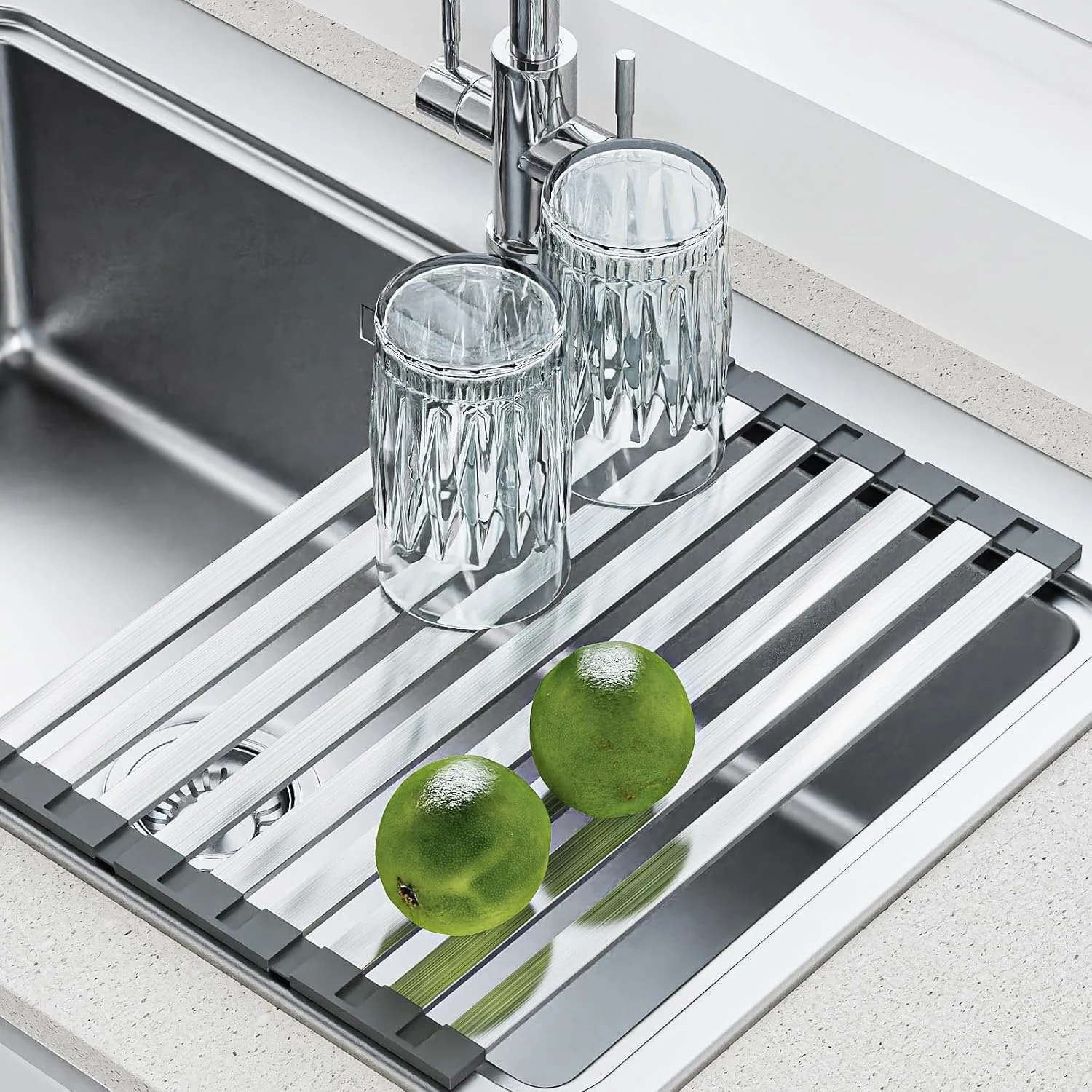
Inside the sink
An in-sink rack leaves more countertop free and lets drips fall into the sink. It also occupies part of the sink. Measure interior clearance and think about how much room you need for washing.
On the counter
A countertop rack keeps the sink available. A draining model needs a suitable route into the sink; a collection tray needs regular emptying. Check the actual drainage design instead of assuming every rack has a spout.
Across the sink
Expandable or roll-up designs depend on a supported span. Check the product’s support requirements, and leave access to the faucet.
Inside the sink
Beside the sink
Across the sink
Your before-you-buy checklist
- In-sink
- Drips fall into the sink; some washing space is occupied.
- Countertop
- Check where water collects or drains. A tray is not automatically a drain spout.
- Across-sink
- Confirm the supported opening and stable contact at both edges.
Compare the actual product details
Use these as starting points, not a guarantee of fit. Check the selected version and measurements before ordering.
Choose by placement or browse all products.
Questions to work through in your kitchen
Which position keeps the sink usable?
A countertop rack leaves the basin available for washing large pans, but occupies counter space. An in-sink rack frees that counter space while taking up part of the basin. Think through a normal meal cleanup: if you regularly wash a large pan, check whether you can still turn and rinse it with the rack in place.
Does every countertop rack drain into the sink?
No. A removable collection tray and a draining outlet are different designs. A collection tray needs emptying; an outlet needs to reach the sink in the intended position. Review the model’s drainage photos before choosing a spot, especially if your sink has a raised rim.
When should I consider a roll-up rack?
Consider one when you want a temporary drying surface and somewhere to store it afterward. Check the supported span and leave room to use the faucet. Do not assume that a roll-up drying rack is suitable for hot cookware or food preparation unless the selected product explicitly supports that use.